
The 'art' in collecting
Anthony Richter Collection Founder
Write your text here...
HUMANITY ... The Bad ... The Good ... and the Wonderful
Museums, galleries, private collectors and even corporations are faced with a similar dilemma. Vermeer's painting of 'Girl with a Pearl Earring' is offered and bought. It is later found to the horror of all (but the forger) that the Vermeer purchased for an obscene amount is actually a Meegeren's and would be more accurately described as 'Mistress' with a Pearl Earring ... a very famous fake.
Buyers with even modest budgets face the same challenge. Nobody has an interest in buying a fake. Where facsimiles, replicas and reproductions are very important to museums and collectors ... fakes are harmful to finance and almost always as importantly, to reputations no matter how well intentioned the purchase.
In the many years of acquiring specific artifacts Anthony Richter confronted the problem with 'heavyweight' help. He knew that a love of ancient artifacts had precious little to do with knowing anything about buying an authentic artifact versus even a low quality fake. To make a 'safer' acquisition he did what he had done in his corporate life - he sought the expertise of the most experienced specialists available to him.
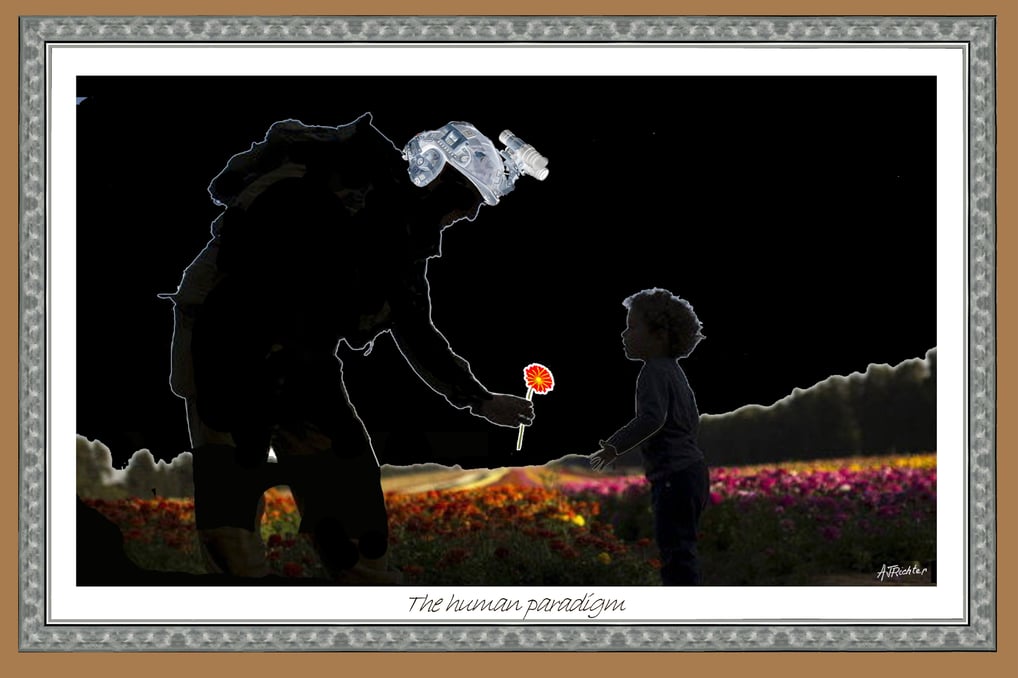
Below there are a selected number of drawings, paintings and art. Save for Richter's 'The human paradigm' visual commentary on Man, other sketches and water-colour paintings were produced by him as an indispensable part of his acquisition procedure.
We are promised the world ... then eventually given an atlas.
Captured 2024: A comprehensive grouping of deeply symbolic insights into humanity's way of being the species known as Homo Sapiens sapiens.
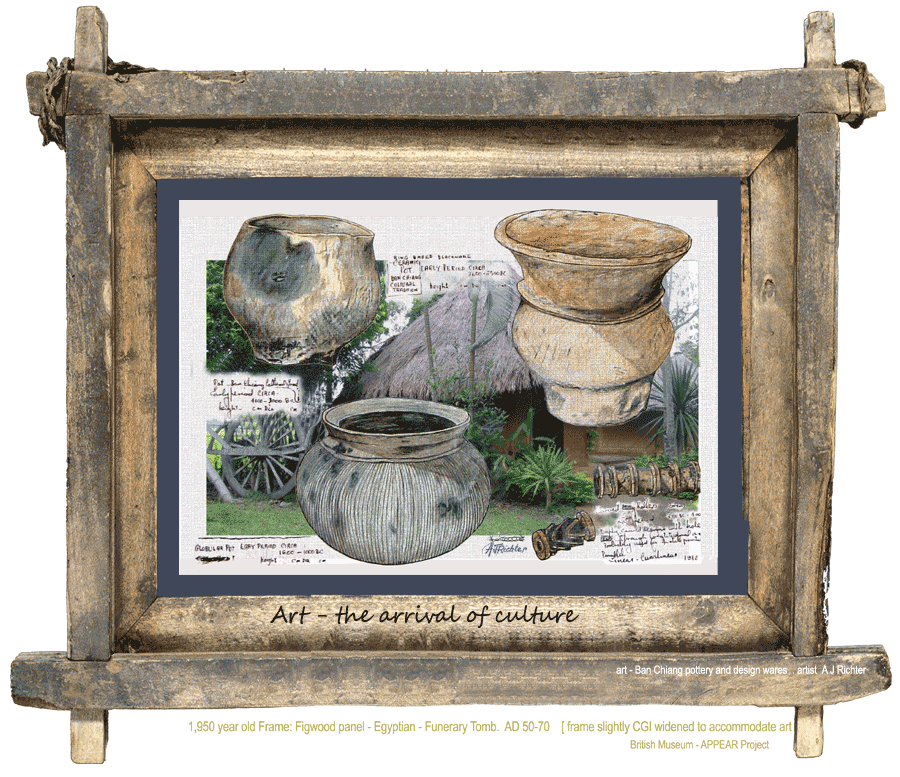
Primitive and globular incised pottery. Baked clay patterned imprint rollers. 3000 -1600 bce BAN CHIANG Thailand
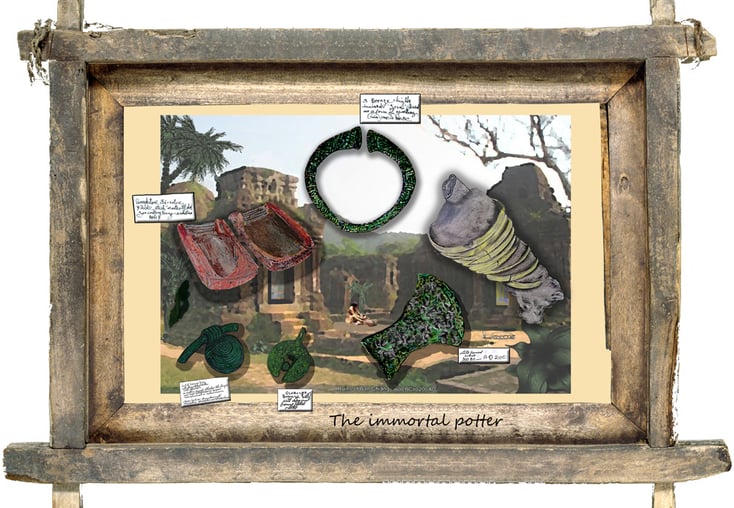
I have chosen this one of a number of watercolour paintings to describe a ritual I began and continued in the process of purchasing artifacts. I continued this practise until around 2000 with the arrival of the first of the phone cameras.
With my first purchases for the Civilization Collection in 1984 there were almost always many more artifacts available to purchase than were needed for that moment of the collection. Choices had to be made. Though competent with my Pentax SLR cameras - using a 35mm film was unnecessarily time consuming with processing times running into days. Since most early acquisitions were made during business trips to various countries there would be little time for decision-making delays.
I was painfully aware that fast, decisive decision-making always allowed ample time for regret if you get it wrong. To avoid many of these barriers I would make, on-the-spot sketches. (Despite being far from gifted in art). I am hoping website visitors will be kind enough to believe I have somewhat improved on the early chicken scratchings of 1984. The in-situ sketches would be accompanied by brief scribbled notes of principal importance or relevance as provided by gallery, dealer or owner. Those of museums responsible for acquisitions, gallery owners and private collectors are aware there are times when an offering comes up short of first descriptions. The sketching gave me an amazing means of seeing close up in fine detail any flaws, breaks, wrong textures and even anatomical aspects that affirmed a piece or had it consigned to the 'wrong' basket.
The process was successful for 20 years when camera phones took over the task: Whilst I enjoyed the rapid sketching I got to know the pieces a little better while drawing them. This process gave me a way to recall with a high level of accuracy the issues I would research and consult on before making or not making a purchase only days from first viewing. It was a necessarily frantic process: A business visit to Paris may last barely 3 days which is the minimum time a relatively sound purchase could be achieved. It does need to be said that preliminary discussions and photographs had preceded my site visit with the added assurance of vendor support.
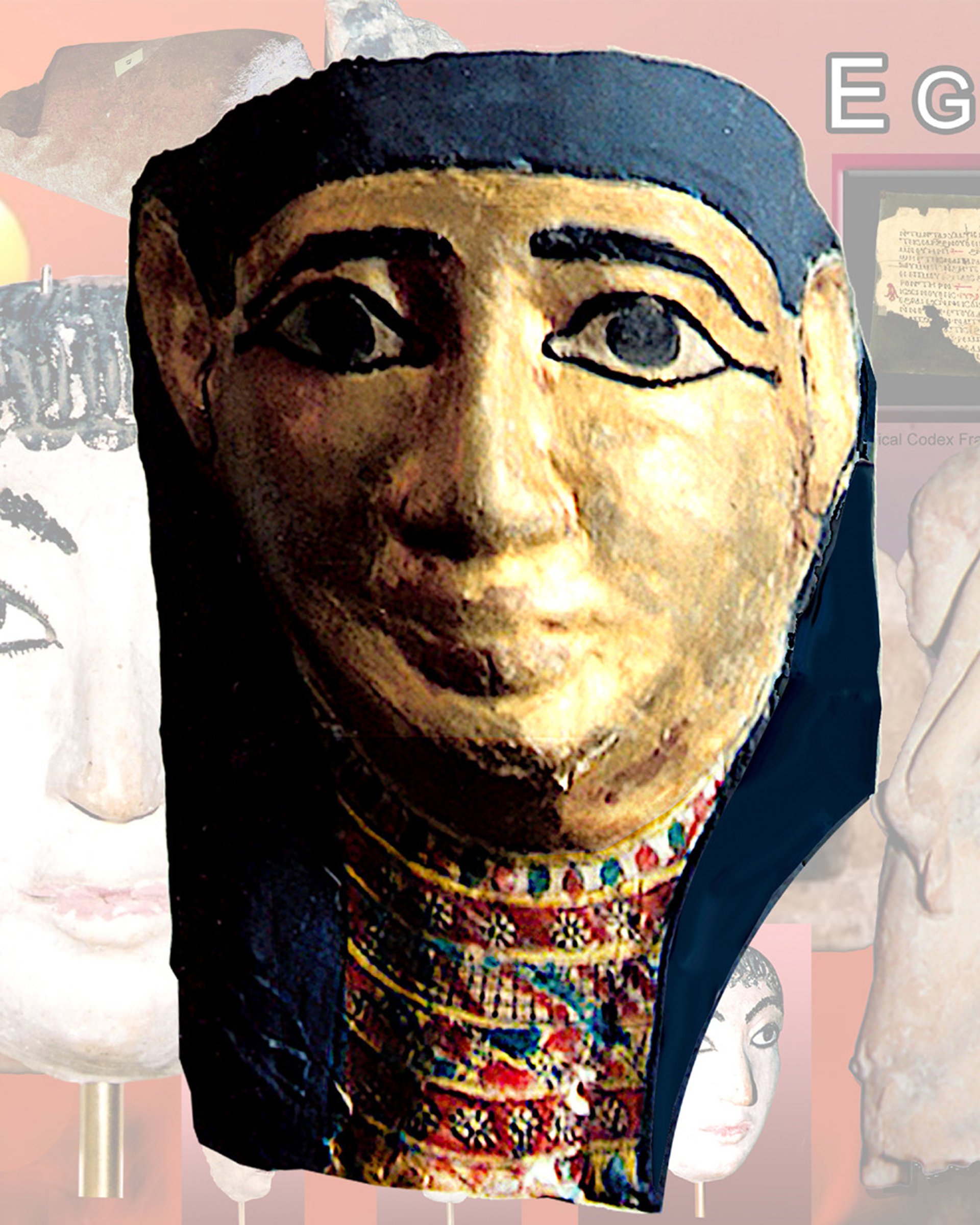
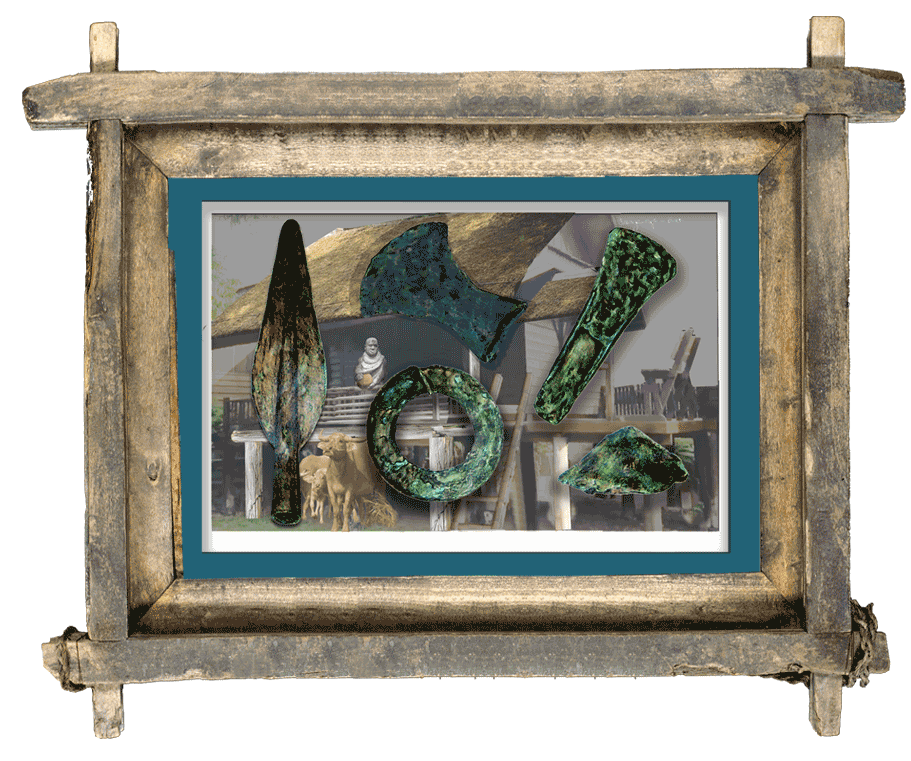
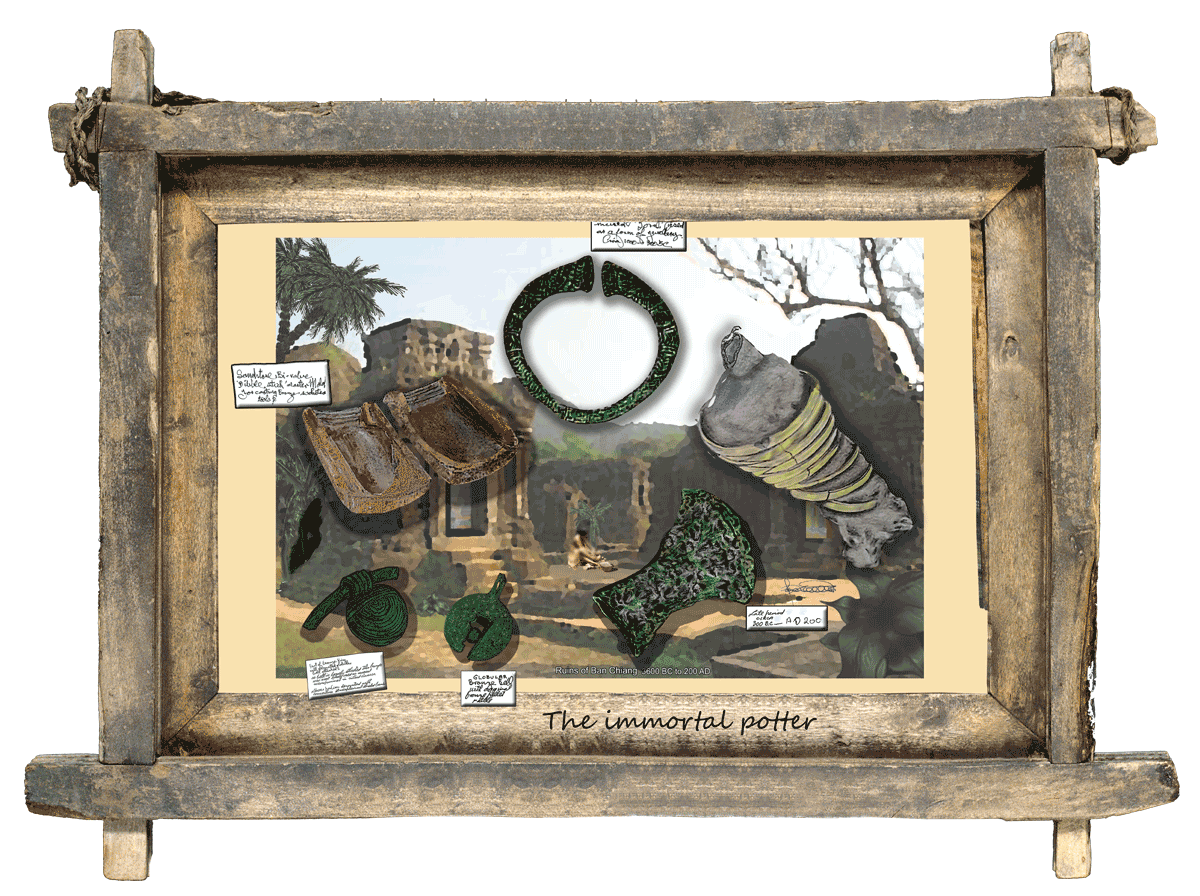
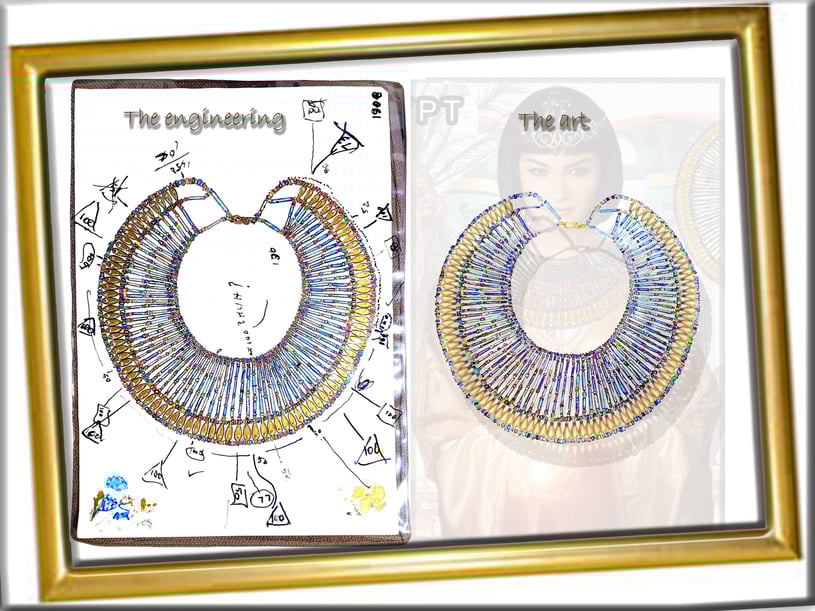
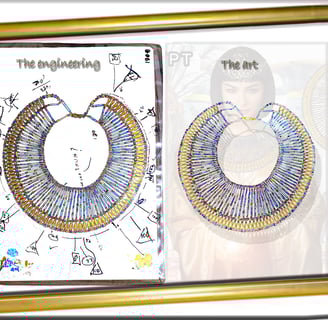
Often, years after being little more than rapidly executed line-drawings I took immense pleasure in converting the madman-scribbles - using the artifact (that had been acquired) as my model to create the water-colour paintings above and following. 40 years on and I still get immense pleasure in producing the water colour paintings. Lower on this page is my water-colour of an Egyptian 'Broadcollar': A little obsession went a long way ... the bejewelled collar was made up of over one thousand four hundred individual pieces.
Years later I noticed, with some humour, that many of those vital in-situ sketches were made on the back of hotel stationary!
Former Patron of The British Museum 'Reader' of The British Museum Library Associate of The British Museum Visitor to the museum Conservatory Laboratories and Restoration Workshops

Predict the future
You didn’t come this far to stop
It has always seemed apparent to me that the seeds of all answers lie in the question. The first of many questions that have mattered to me is one that would reveal some way to reconcile with the stark reality of what presented as Man's true nature. There has always been a need to challenge how in light of my own childhood, family tragedies - my own and others, later personal experiences and the torment of knowing of the suffering experienced by hundreds of millions innocents through interminable wars, I could reach any other conclusion but that Mankind is a deeply flawed species.
Right on cue the cry Misanthropy! goes up in hopes of diminishing the implication that Man is anything less than divine. The underpinnings for the first knee-jerk reflex is the religious view holding Man to be made in the image of his creator: That is followed faithfully by the use of any word or thing that would divert suggestions that an all-embracing criticism of Mankind must by default be an accusation of all.
Defensive counter-punching is understandable but occurs on the wrong assumption that a 'flawed species' was a wholesale condemnation of every members of the species: this unthinking reaction seems impervious to evidence showing that an overwhelming percentage of us are fully capable of the most extreme cruelties and evils other species are incapable of.
It is a relief- after more than 50 years of seeking the immutables of Homo Sapiens, to accept the unacceptable. As I have long believed, the answer was in the question. Setting aside the intervention of a Non Human Intelligence, one cannot alter the nature of a species. The en-couragement that keeps my spirits up is a certainty that the science of genetic re-engineering is creeping closer. I wish to record here that the effort functionally included the invention of the world's first Neurocomputer modeled on the human brain, the invention of the Solid State Drive of computers that is the worldwide standard, the invention of the USB or 'thumb-drive' and five books analyzing the way in which a far too large part of our human population live in physical uncertainty, poverty and fear. Each book attempts to show ways or to provide any method, awareness or means to help in even the least way to dig a pathway out to a more 'humane' existence.
Explore the intricate painted drawings and colorful creations inspired by love of treasure and attention to detail.
Art Treasures
Discover unique painted drawings showcasing color, craftsmanship, and texture treasures.


Absolutely stunning artwork, the attention to detail is incredible. A true masterpiece in every sense.
Art Lover


★★★★★